Sosigenes of Alexandria (Σωσιγένης ο Αλεξανδρεύς) was the astronomer consulted by Julius Caesar for amending the Roman Calendar, which was 67 days in advance of the true year around 46 BC.
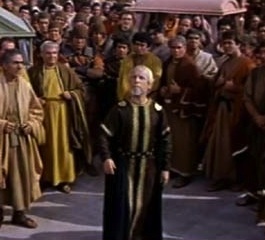
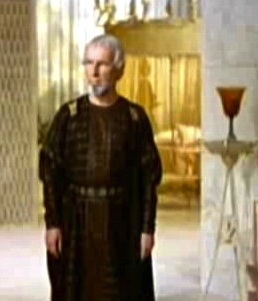
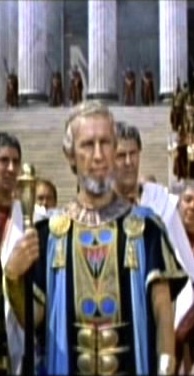
So what do we know about Sosigenes today? He was doubtless an Alexandrian Greek, and his name is composed of the stem of the verb σῴζω meaning "safe, whole, unwounded", σωσί (sosi), and γένης (genes) meaning "born," hence "of safe birth." In popular culture, the 1963 movie "Cleopatra" starring Rex Harrison, Richard Burton and Elizabeth Taylor implies that Sosigenes was in the entourage of Cleopatra and since Caesar was himself lauded in history as an amateur of both beautiful women and astronomy, he was quite probably inclined to consult Sosigenes. Using his authority as ruler of the Roman world he accomplished the reform. The calendar was probably designed by Aristarchus about 200 years earlier on the basis of an calendar which had been introduced in Egypt by the Ptolemaic dynasty (a Hellenistic royal family which ruled over Egypt for nearly 300 years, from 305 BC to 30 BC) nearly two centuries before. Sosigenes just adapted it for the mighty Romans. It is Pliny the Elder who mentions him in his "Natural History" Book 18: "... There were three main schools, the Babylonian, the Egyptian, and the Greek; and to these a fourth was added in our country by Caesar during his dictatorship, who with the assistance of the learned astronomer Sosigenes (Sosigene perito scientiae eius adhibito) brought the separate years back into conformity with the course of the Sun." In Book 2, Sosigenes is refered to as in agreement with the Babylonian astronomer Kidenas (4th or early 3rd century BC) that Mercury is never more than 22° from the Sun: "The star next to Venus is Mercury, by some called Apollo; it has a similar orbit, but is by no means similar in magnitude or power. It travels in a lower circle, with a revolution nine days quicker, shining sometimes before sunrise and sometimes after sunset, but according to Cidenas and Sosigenes never more than 22 degrees away from the sun."
The year 46 B.C., Julius made to consist of 445 days: it was called the year of confusion; but it was more properly the last year of confusion. The reformed year began, not on the 25th of March, but 1st January, 45 B.C. The new year was one of 365 days, with an additional day for every fourth year, in February. The alternate months of the year (January, March, May, July, September, November), were to consist of 31 days: the intervening months were each to be of 30 days (February being 29, except in leap years). This symmetrical arrangement was upset by the vanity of Augustus in 27 B.C., when he gave his own name to the 8th month, then added the day he took from the 9th, and otherwise varied the lengths of the months into their present irregularity.
The Julian year of 365¼ days was too long by 11 minutes 12 seconds. This must have been known to Caesar and to Sosigenes; as more than 100 years before, it had been proved by Hipparchus, whose calculation was within 4 minutes of the truth. Hipparchus had calculated that the error would amount to a day in 300 years; but it seems that the error is more than double and would amount to a day in 128 years. Caesar and Sosigenes doubtless considered that the error might be left to the future to correct. They could hardly anticipate that it would be binding on Western Europe for 16 centuries, and on Eastern Europe for nearly 20 centuries.
The Julian Calendar, since being changed by Augustus in 27 B.C., governed the whole of Christendom until 1582, when Pope Gregory XIII, based on the work of astronomers Christopher Clavius and Aloysius Lilius struck out the ten days then in excess, and reformed the Calendar of Julius by an order, that the last year of each century should be a leap year only when it is exactly divisible by 400. That is to say, 3 leap-years are suppressed in every 4 centuries. This is today called the Gregorian Calendar. The Julian Calendar still governs a large part of Orthodox Christianity, namely the Greek Orthodox Church of Jerusalem, Russian Orthodox Church, Serbian Orthodox Church, Georgian Orthodox Church and the Autonomous Monastic State of the Holy Mountain, Mount Athos. One also has to mention the various Old Calendarist Orthodox Christians in Greece, Romania, Cyprus, Bulgaria, the uncanonical Macedonian Orthodox Church, and other "Orthodox" groups throughout the world that are not in full communion with the rest of Orthodoxy. Most of the Oriental Orthodox Churches use the Julian calendar when calculating the Nativity Feast. The Julian calendar is still used by the Berber people of North Africa.
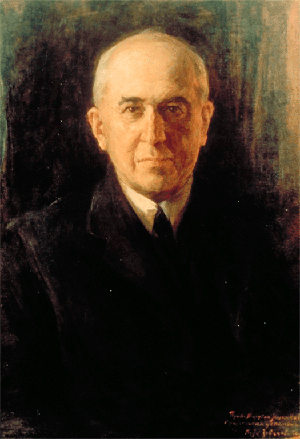
At a "Pan-Orthodox Congress" of Eastern Orthodox churches, held in İstanbul (Κωνσταντινούπολις, Constantinople) May 10-June 8, 1923, the Serbian astronomer Milutin Milanković, a scientific delegate to the congress representing the Kingdom of Serbs, Croats and Slovenes, proposed the Revised Julian Calendar for adoption by the Orthodox churches. In principle all the churches present accepted it, but the Serbian Orthodox Church never implemented it. It is important to mention that the congress was organised by a controversial Ecumenical Patriarch Meletius IV (Metaxakis) of Constantinople. The "Pan-Orthodox Congress" was attended by representatives of the Patriarchate of Constantinople (Patriarch Meletius IV, Metropolitan Kallinikos (Delikanes) of Cyzicus, and Professor Vassileos Antoniadis, Halki Theological Institute), the Church of Cyprus (Metropolitan Basil of Nicea (later Ecumenical Patriarch, 1925-1929)), the Church of Greece (Metropolitan James of Dyrrachium), the Church of Serbia (Metropolitan Gabriel (Dožić) of Montenegro (later Serbian Patriarch Gabriel V, 1938-1950) and Professor of Mathematics and Mechanics at the University of Belgrade Milutin Milanković), and the Church of Romania (Archimandrite Jules (Scriban)). The congress not meeting with general approval had an incident when on June 1,1923 a dubious group of Greeks from Contantinople incited by the Turkish agitators held a meeting which ended in an attack on the Ecumenical Patriarchate with the goal of killing Meletius or expelling him from Constantinople. On July 1, 1923, Meletius left Constantinople for Athens because of illness and the need for medical treatment. On September 20, 1923, under pressure from the Greek government and the intervention of Chrysostomos I, Archbishop of Athens, Meletius retired and was replaced by Ecumenical Patriarch Gregory VII of Constantinople.
They synchronized the new calendar with the Gregorian calendar by specifying that the next October 1 of the Julian calendar would be 14 October in the Revised Julian calendar, thus dropping thirteen days. It then adopted a leap year rule that differs from that of the Gregorian calendar: years evenly divisible by four are leap years, except that years evenly divisible by 100 are not leap years, unless they leave a remainder of 200 or 600 when divided by 900, then they are leap years. This means that the two calendars will first differ in 2800, which will be a leap year in the Gregorian calendar, but a common year in the Revised Julian calendar.